
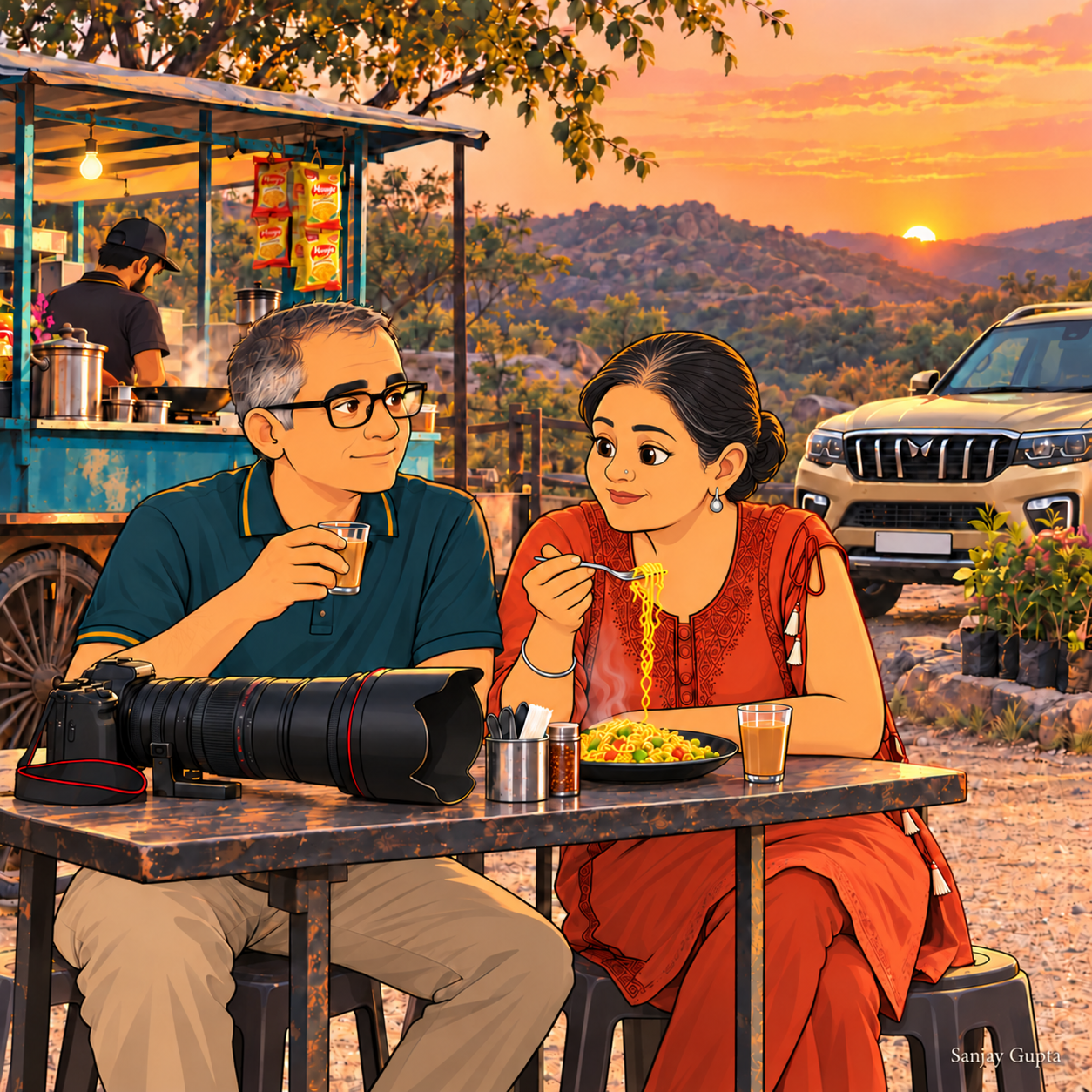
I had been on quite a few work trips in September and October, and hardly had any time at home. So, last Sunday afternoon, Amrita (my wife) and I decided to go out for a short drive. Well, I intended to do some photography. It had been a while since I touched my camera. So I thought I’d take some evening shots.
Amrita had other ideas. She wanted to go to the city to buy some stuff she’d been waiting for. And for me, that meant I would have to miss the photography. I did not want to do that. So what could be the middle way?
Then the Thomas-Kilmann Conflict Model came to mind – a simple model to fall back upon.
Kenneth Thomas and Ralph Kilmann designed the TKI assessment back in 1971 to measure how people handle disagreements. They plotted conflict along two traits: assertiveness (focusing on self-needs) and cooperativeness(focusing on others’ needs).
The model defines five core conflict styles based on these two traits. Competing (win-lose), Collaborating (win-win), Compromising (quick middle ground), Avoiding (lose-lose), and Accommodating (lose-win).
Back to the story.
Knowing photography is my passion, Amrita offered to sacrifice to buy her stuff and pursue it later (she was accommodating). But I did not feel comfortable.
So, offered her a deal. I got her to buy some plants (her love) from a nearby nursery. I knew I would lose some time for my photo-shoot session, but that was okay. I also reassured her that she could get her stuff next week. And she agreed. I think that was a good compromise.
And if Thomas and Kilman were to describe this, it was a little loss for both and a little gain for both, too.
Then we ended that drive with a plate of nice hot Maggi and tea, with the sun setting behind the Aravalli mountains – an evening well spent.
2 Responses
 Amrita Gupta says:
Good one
 Charu Rana Gupta says:
Beautifully put! A lovely reminder that understanding and thoughtful compromises make all the difference
Leave a Reply
Your email address will not be published. Required fields are marked *



Good one
Beautifully put! A lovely reminder that understanding and thoughtful compromises make all the difference